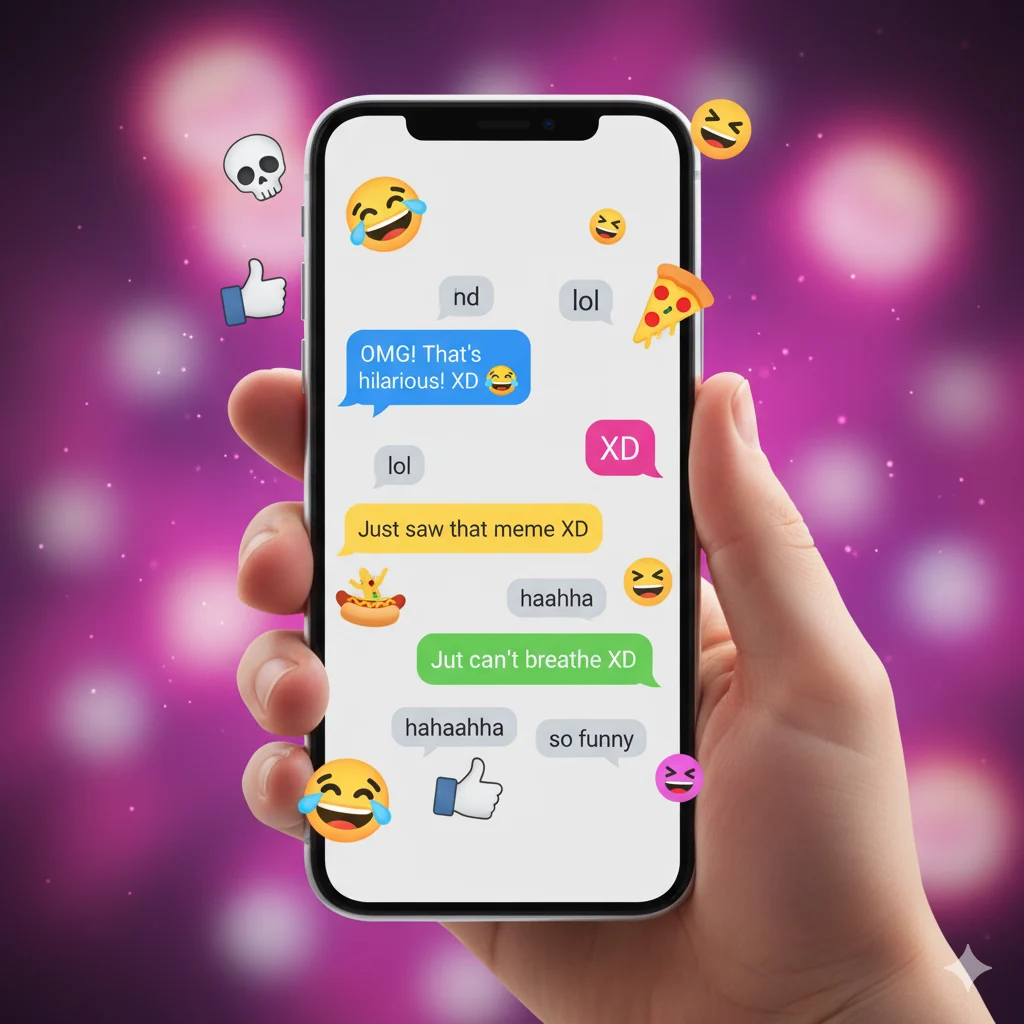
XD is an emoticon used to represent laughter, amusement, or a playful reaction in texting and online messaging. It is widely used in social media, gaming chats, memes, and casual conversations to express joy, humor, or a cheeky response.
XD meaning
XD is a popular internet slang used to express laughter or amusement, representing a smiling face with closed eyes and an open mouth—similar to saying “LOL” or “that’s really funny.”
This guide explains the meaning of XD, its history, variations, proper usage, cultural significance, and common mistakes.
You’ll also see real-life examples, comparisons with other slang, and FAQs to ensure you never misinterpret XD in any conversation.
What Does xd Mean in Text and Online Messaging
XD meaning in chat
XD is a text-based emoticon. When viewed sideways:
- X represents closed eyes (from laughing or squinting)
- D represents a wide-open laughing mouth
Thus, XD conveys laughter, excitement, or joy. It is similar to writing “LOL” but often more expressive or exaggerated.
Example Usage
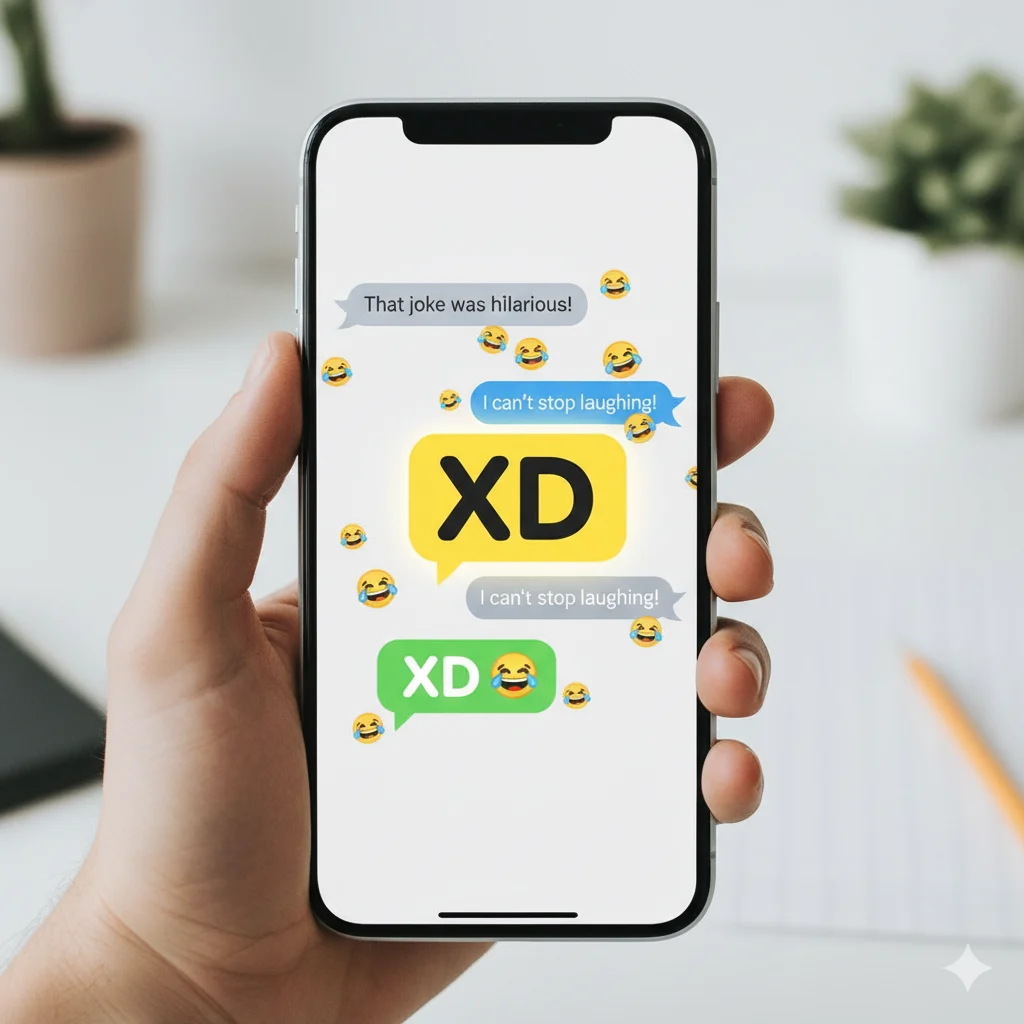
- “That joke was hilarious XD”
- “I can’t believe you did that XD”
- “We survived the game night XD”
Key Characteristics
- Informal and casual
- Expressive of emotions visually
- Common in digital and online culture
- Often used in chats, comments, and posts
History and Origin of XD
XD emerged from early internet chat culture:
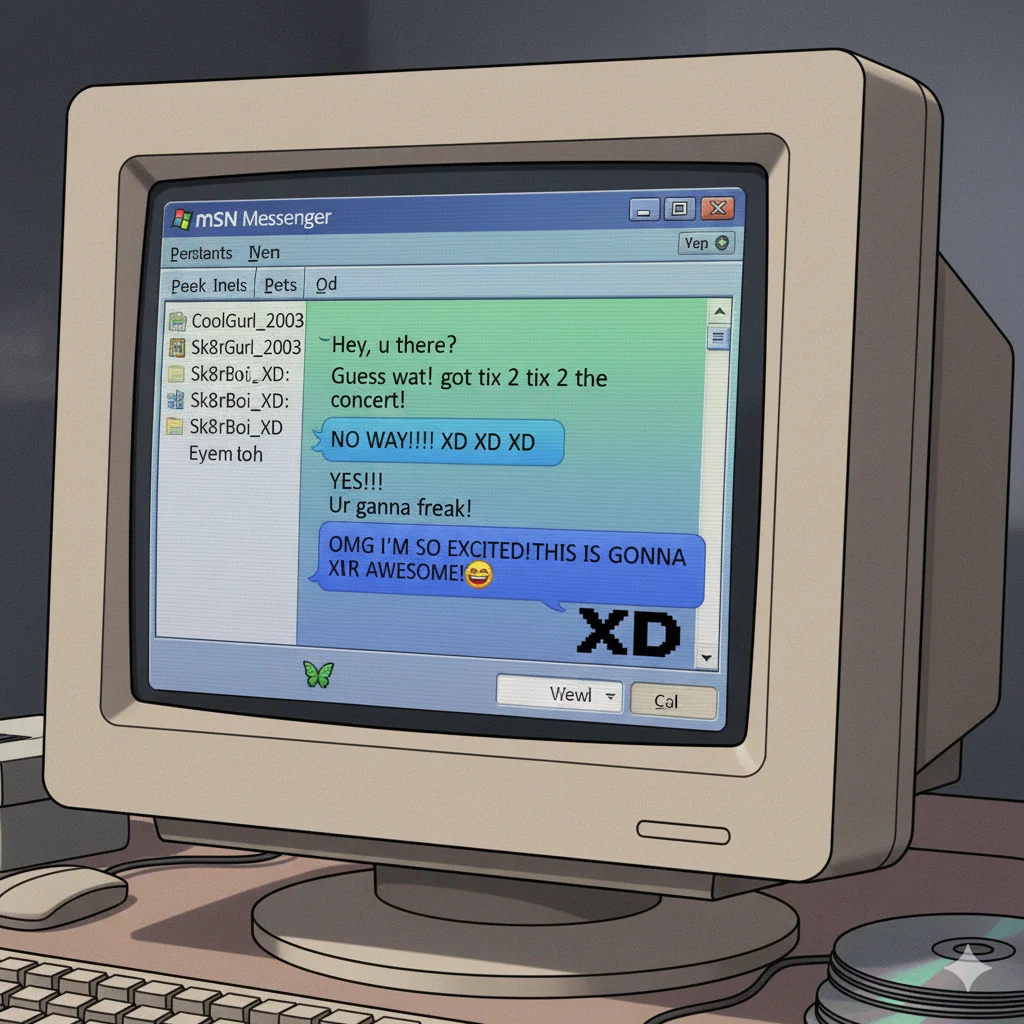
- First popularized in MSN Messenger and Yahoo Messenger in the 1990s and early 2000s
- Widely used in forums, fan communities, and social media
- Became standard emoticon before the rise of emojis
Cultural Context
- Popular among Gen Z and Millennials
- Associated with playful, humorous, and meme culture
- Often appears in gaming chats, Discord servers, and meme captions
🎬 What Does XD Mean in Movies?
In movies, XD refers to Extreme Digital Cinema — a premium movie format by Cinemark that offers extra-large screens, powerful surround sound, and enhanced visuals for a more immersive experience. It doesn’t change the movie itself, but it upgrades how you watch it.
Example:
“Let’s watch the new action movie in XD—the screen is huge and the sound hits harder.”
👉 In short: XD = bigger screen, louder sound, more cinematic impact.
Different Meanings and Variations of XD
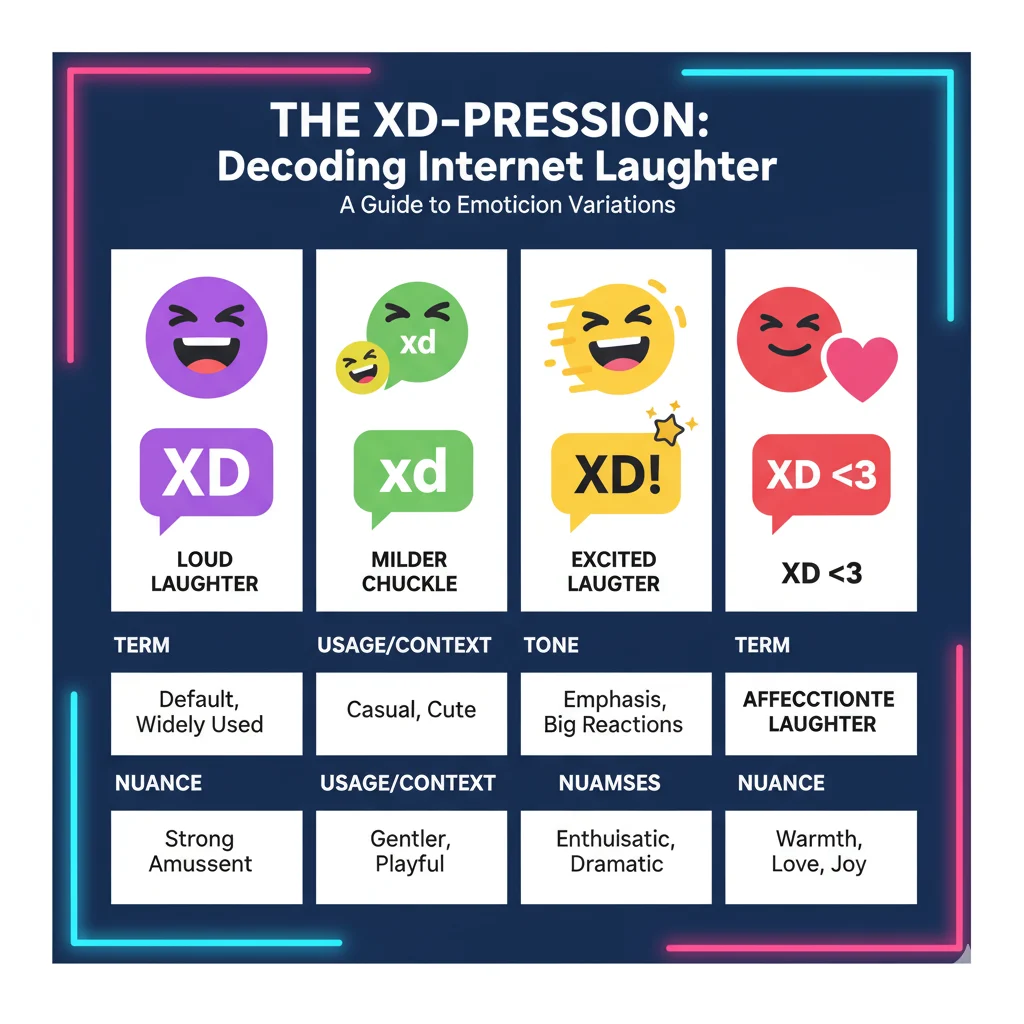
While the primary meaning is laughter, XD can convey slightly different tones depending on context:
| Variation | Meaning | Example |
|---|---|---|
| XD | Laughing, joy | “You tripped on the stairs XD” |
| xD | Same as XD, slightly less intense | “That was funny xD” |
| XD! | Excited laughter | “We won the game XD!” |
| XD <3 | Playful laughter with affection | “Miss you XD <3” |
Tone and Context
- XD = general laughter
- xD = playful or casual
- XD! = enthusiastic laughter
- XD with emojis = combined expression of humor and mood
XD vs LOL vs LMAO
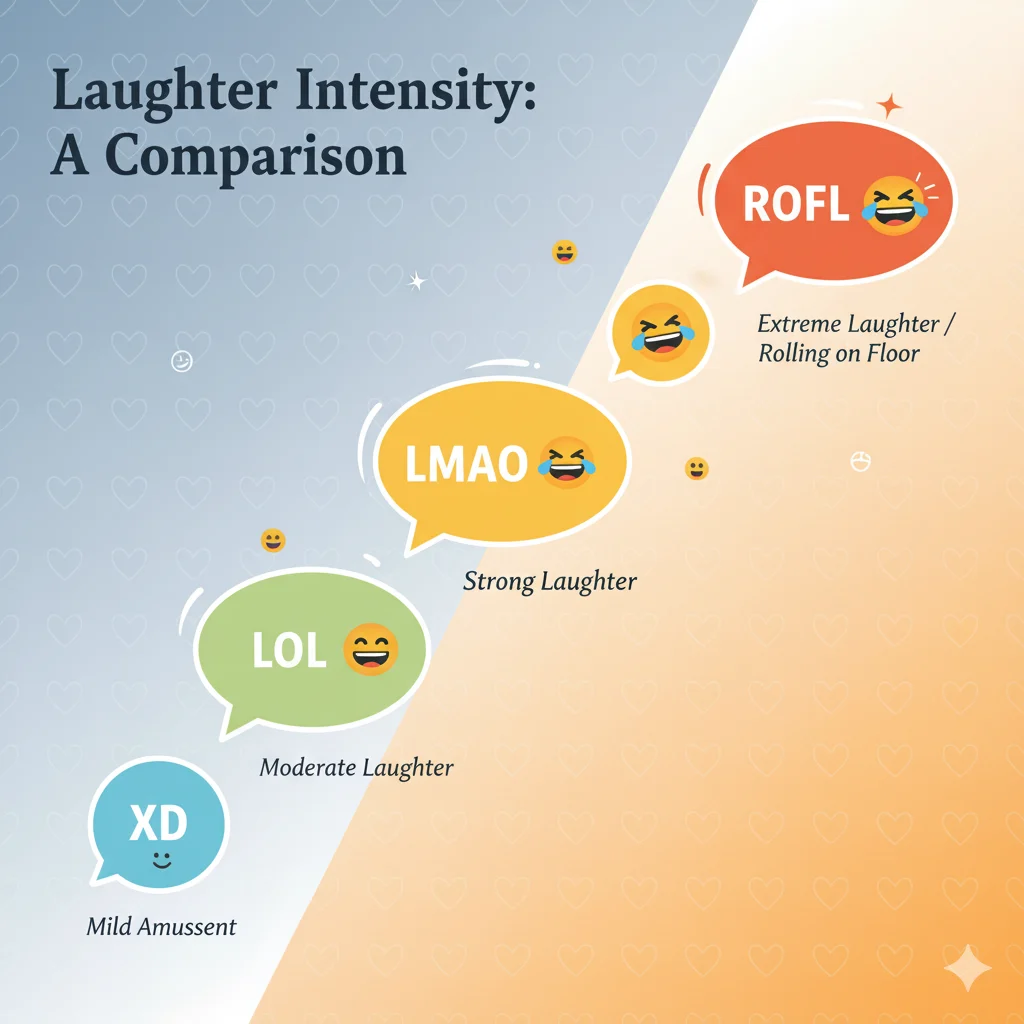
Many confuse XD with LOL, LMAO, or other laughter-based slang. Here’s the difference:
| Emoticon/Slang | Meaning | Usage | Tone |
|---|---|---|---|
| XD | Exaggerated laughter | Text, memes, chats | Playful, expressive |
| LOL | Laugh out loud | Casual chats | Neutral, common |
| LMAO | Laughing my ass off | Texting, social media | Stronger laughter |
| ROFL | Rolling on floor laughing | Hyperbole | Extreme humor |
| Haha / Hehe | Laughing | Written or spoken | Mild or playful |
XD is more visual and playful than simple “LOL” because it shows a laughing face rather than spelling it out.
Proper Usage of XD
XD is casual and should be used with friends, online communities, or informal texting. Here are some usage tips:
- Use with close friends – XD is informal
- Pair with context – Jokes, funny stories, or memes
- Avoid in professional chats – Could be seen as unprofessional
- Combine with emojis for effect – XD 😂 🤣
Examples
- “That meme was perfect XD”
- “We totally failed the challenge XD 😂”
- “XD I can’t believe that happened”
XD in Gaming and Online Communities
XD is extremely common in gaming chats and online communities:
- Discord servers: Express laughter in response to funny messages
- Twitch or YouTube chats: Use XD for playful reactions
- Multiplayer games: Reaction to funny gameplay or mistakes
Example in Gaming Chat
- Player 1: “You just fell off the map XD”
- Player 2: “I know, I’m terrible XD”
Common Mistakes with XD
- Using in formal/professional chats – Avoid in emails or official messaging
- Overuse – Can make messages seem childish
- Misinterpretation – Some older audiences may not understand XD
- Mixing with sarcasm – Could confuse the tone
Real-Life Examples of XD in Sentences
- “XD I can’t stop laughing at your story!”
- “That cat video had me rolling XD”
- “We got lost on the way to the party XD”
- “XD best night ever!”
Emotional and Social Impact of XD
Using XD can:
- Strengthen friendship bonds by showing humor
- Convey playfulness and lightheartedness
- Help in digital communication where tone is absent
It’s part of modern digital body language, replacing facial expressions and gestures in online texting.
XD Meaning in Social Media
- Common in memes to exaggerate reactions
- Paired with images, GIFs, or TikTok content
- Used in captions for humorous context
Example
- Meme Caption: “When you see your friend spill coffee on their shirt XD”
- TikTok Comment: “XD I’m dead 😂”
FAQs About XD
Is XD considered slang?
Yes, it is a slang emoticon commonly used in informal digital communication.
Can XD be used professionally?
No, it’s informal and best suited for casual chats with friends.
What’s the difference between XD and emojis?
XD is a text-based emoticon, while emojis are visual images; both convey emotion.
Is XD universal?
Mostly used in English-speaking and online gaming communities, but widely recognized globally.
Does XD have a negative meaning?
No, it’s always used to express laughter, joy, or playfulness.
Conclusion
XD is a fun, versatile, and expressive emoticon used to convey laughter, joy, and playful reactions in texting, social media, and online communities. Understanding its context, variations, and proper usage ensures you can communicate humor effectively while avoiding misinterpretation. Whether paired with emojis, memes, or gaming chats, XD remains a timeless part of digital communication culture.