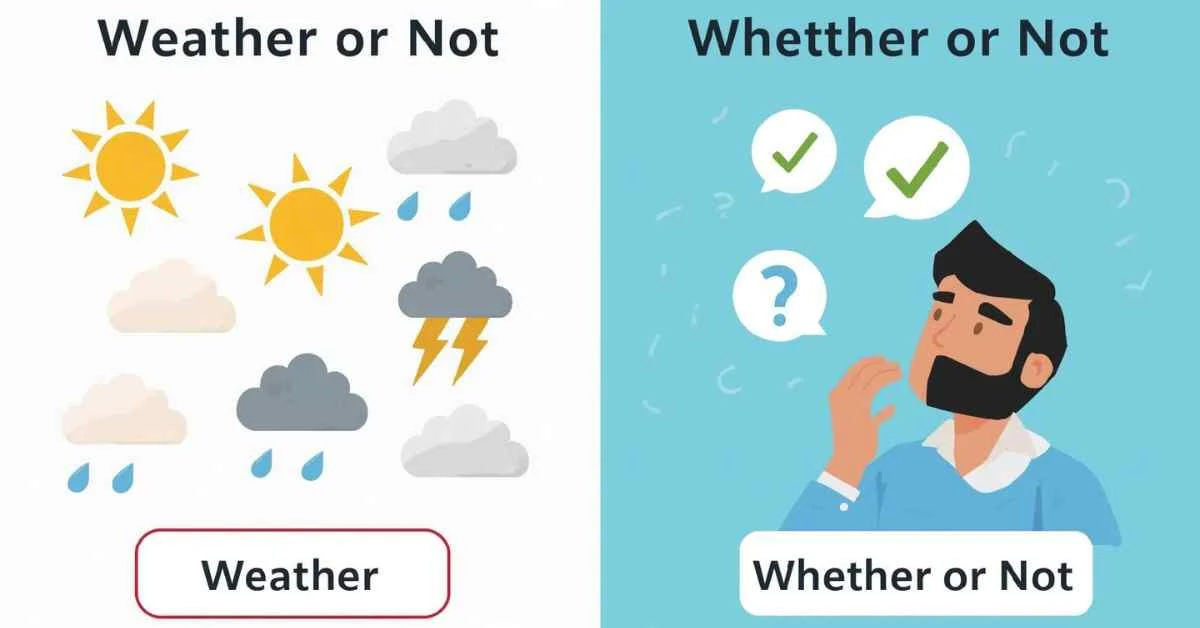
Have you ever typed “weather or not” and wondered if it was correct? You are not alone. Many people search for this phrase because it sounds right but is usually wrong. The real phrase you want is “whether or not”, used when talking about choices, conditions, or possibilities.
The confusion happens because weather and whether sound the same. One talks about rain, sun, or storms, and the other shows a decision or option. People make this mistake in emails, social media posts, and even school work.
This article will help you understand the correct way to use whether or not. You will see common mistakes, learn the difference between British and American English, and look at examples from emails, news, and social media.
By the end, you will know how to use whether or not correctly and avoid mistakes.
Weather or Not – Quick Answer
“Weather or not” is almost always wrong.
The correct phrase for decisions or possibilities is:
✅ Correct Example:
- I don’t know whether or not it will rain today.
- She asked whether or not the meeting was canceled.
❌ Incorrect Example:
- I don’t know weather or not he is coming.
Tip: If you can replace the word with “if”, use whether.
The Origin of “Weather or Not”
The confusion comes from history and pronunciation:
- Whether: From Old English hwæther, meaning “which of two”.
- Weather: From Old English weder, meaning air, sky, or climate.
They sound almost the same, which is why many people type weather or not by mistake.
Fun fact: There is no historical record where “weather or not” was correct for showing choices. It only refers to climate.
British English vs American English
Good news: There is no difference in spelling or usage. Both forms follow the same rule:
| Phrase | Correct Usage | Example |
|---|---|---|
| Whether or not | Choice, condition, decision | I don’t know whether or not she will join. |
| Weather | Climate, forecast | The weather is sunny today. |
Pro Tip: Even in formal British writing or US business emails, use whether or not for decisions. Save weather for rain, snow, or sunshine.
Which Spelling Should You Use?
Here’s a simple guide:
- US audience: whether or not
- UK/Commonwealth audience: whether or not
- Global / professional writing: whether or not
Remember: Only use weather when you mean climate. If it shows a choice, question, or option, use whether.
Common Mistakes With “Weather or Not”
- Using “weather” instead of “whether”
❌ I’m not sure weather or not she’ll call.
✅ I’m not sure whether or not she’ll call. - Relying on spellcheck
Spellcheck may not catch it because weather is a real word. - Overthinking
People assume it feels correct. Grammar rules don’t agree. - Mixing informal and formal writing
Even casual social media posts should prefer whether or not for clarity.
“Weather or Not” in Everyday Examples
Emails
- Please confirm whether or not you can attend the meeting.
News Headlines
- Officials debate whether or not to cancel the event.
Social Media
- Can’t decide whether or not to post this 😅
Formal Writing
- The report examines whether or not the new policy is effective.
Google Trends & Usage Data
Search data shows:
- “weather or not” spikes when people check grammar or spelling.
- “whether or not” is much more common in writing.
- High-interest countries: US, UK, India, Pakistan, Canada.
- Users: Students, ESL learners, professionals, bloggers.
Insight: People want to correct their writing, not discuss climate.
Comparison Table: Weather vs Whether
| Word | Meaning | Correct Usage | Example |
|---|---|---|---|
| Weather | Climate, temperature, forecast | ✅ | The weather is rainy. |
| Whether | Choice, condition, possibility | ✅ | I don’t know whether or not she’ll come. |
Quick Tip: If you can ask “if or not,” then use whether or not.
FAQs About “Weather or Not”
1. Is “weather or not” ever correct?
No, except when talking about actual weather (rain, sun, wind).
2. Why do people confuse it?
They sound the same and both are real words.
3. Can I replace “whether” with “if”?
Yes, often. If it works, use whether.
4. Is this mistake common in professional writing?
Yes, especially in emails or fast typing.
5. Do British and American English differ here?
No. Both use whether or not.
6. Why does Google show “weather or not” so often?
Because it’s commonly typed online, especially in blogs, memes, and casual posts.
7. Is “whether or not” formal?
It works in formal and casual writing alike.
Conclusion
The phrase “weather or not” is a common mistake caused by similar sounds. The correct phrase is “whether or not” when talking about choices, decisions, or possibilities. Only use weather for climate or forecasts.
No matter where you live US, UK, or anywhere else, this rule is the same. A simple trick: if you can replace it with “if or not,” it’s whether.
Using the correct form improves your writing clarity, professionalism, and credibility. Now, the next time you type weather or not, you’ll know exactly what to write and you’ll never make this mistake again.

Hi, I’m Lydia Fenn, and I love making English grammar simple and fun. On Punspanda.com, I share tips, examples, and tricks to help you write confidently and never get tripped up by tricky rules.