Have you ever typed I love ______ the world and paused? Should it be travelling or traveling? You are not alone. Many people get confused because English is different in different countries. Using the wrong spelling can make your writing look unprofessional or odd.
This guide will solve the confusion. You will learn the quick answer, the history of the word, British vs American spelling rules, common mistakes, and everyday examples.
By the end, you will know exactly which form to use for emails, blogs, social media, or essays. Whether you are writing for the UK, the US, or a global audience, this article makes it easy to get it right.
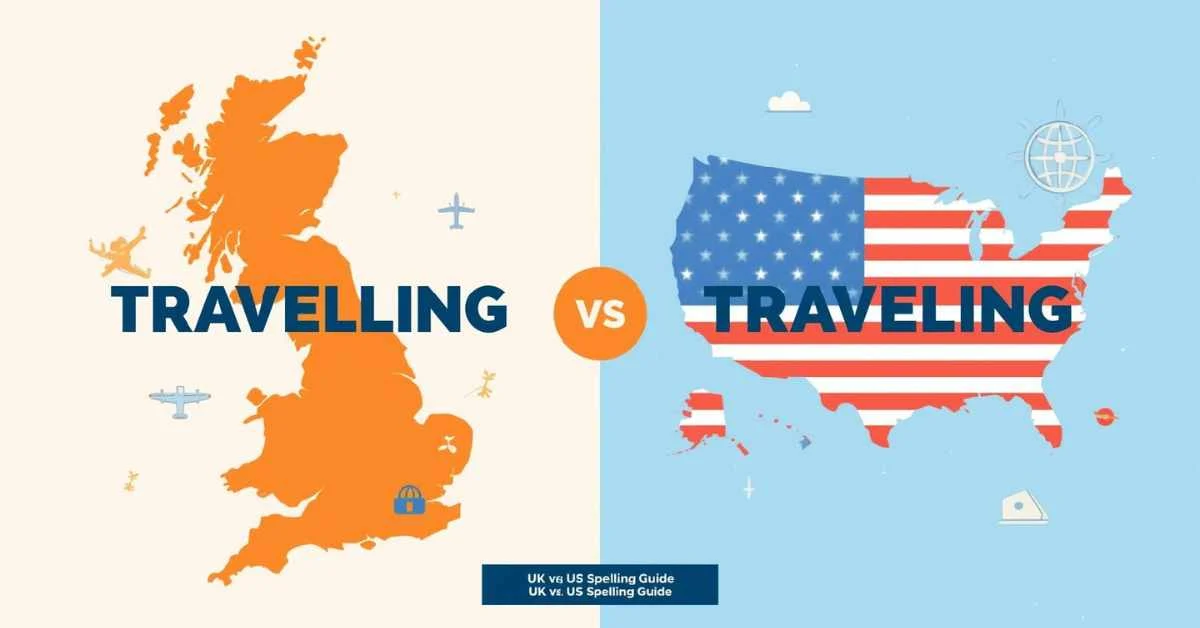
Travelling or Traveling – Quick Answer
Here is the simple answer:
- British English: Travelling ✅
- American English: Traveling ✅
Examples:
- UK: I am travelling to London next week.
- US: I am traveling to New York next week.
Both spellings are correct, but choose based on your audience.
The Origin of Travelling/Traveling
The word travel comes from the Old French word travail, which means “work or effort.” Long journeys used to be hard, so traveling was like work!
Over time, English spelling changed differently in the UK and the US:
- British English: Often doubles letters before -ing to keep pronunciation clear → travelling.
- American English: Simplified spellings → traveling.
This is why the UK uses travelling and the US uses traveling today.
British English vs American English Spelling
| Feature | British English | American English |
|---|---|---|
| Travelling | ✅ | ❌ |
| Traveling | ❌ | ✅ |
| Cancelled | ✅ | ❌ |
| Canceled | ❌ | ✅ |
| Focused/ Focussed | ❌ | ✅ |
| Counselling/ Counseling | ✅ | ❌ |
Tip: Always follow the regional style guide. Double letters are common in the UK but simplified in the US.
Which Spelling Should You Use?
- UK, Australia, Canada: Use travelling.
- US, Philippines: Use traveling.
- Global content: Pick one spelling and stay consistent.
Consistency is key. Changing spelling in the same document can confuse readers and hurt SEO.
Common Mistakes with Travelling/Traveling
- Mixing forms: I am traveling to London (UK context)
- Using single L in UK English: I am traveling in London ❌
- Using double L in US English: I am travelling in New York ❌
- Confusing travel with trail or travail
- Forgetting past tense: UK → travelled, US → traveled
✅ Solution: Always check your audience and style guide.
Travelling/Traveling in Everyday Examples
Emails:
- UK: Looking forward to travelling with you next month.
- US: Looking forward to traveling with you next month.
Social Media:
- UK: Just finished travelling across Europe!
- US: Just finished traveling across the US!
Blog or Article Writing:
- UK: Many are travelling during summer holidays.
- US: Many are traveling during summer holidays.
Formal Writing:
- Use the spelling that matches the style guide: travelling for UK English, traveling for US English.
Travelling/Traveling – Google Trends & Usage Data
Google Trends shows:
- US searches: “traveling” is far more popular than “travelling.”
- UK, Australia, Canada: “travelling” is most common.
This shows that regional spelling affects SEO. Using the right form can improve your website traffic and engagement.
Travelling or Traveling in Business and Professional Writing
It is very important to use the right spelling in emails, reports, and work writing. Using the wrong form can make your document look unpolished or confuse international readers.
Tips for professionals:
- UK audience: Always use travelling.
- Example: Our team is travelling to London next month for the conference.
- US audience: Use traveling.
- Example: The team is traveling to New York for the annual meeting.
Why it matters:
- Professional documents are often read internationally. Using the wrong spelling can subtly affect credibility.
- For reports, proposals, or client-facing emails, choose one form and stick to it.
- Many style guides, like Oxford, AP, and Chicago, prefer regional consistency.
Tips to Remember Travelling vs Traveling Easily
Many people still get confused. Here are simple tips to never mix up travelling and traveling again:
- Think about your audience: UK → double L, US → single L.
- Look at the style guide: AP, Oxford, or your company guide will tell you which spelling to use.
- Use past tense as a clue: UK → travelled, US → traveled. If you need double L, it’s probably UK.
- Check similar words: Words like cancelled (UK) vs canceled (US) follow the same pattern.
- Use tools like MS Word or Grammarly. You can set the language to fix spelling automatically.
Example trick: Memorize “UK doubles, US simplifies.” This works for travelling, cancelled, modelling, and other verbs.
Travelling vs Traveling Comparison Table
| Feature | Travelling (UK) | Traveling (US) |
|---|---|---|
| Double “l” | ✅ | ❌ |
| Popular in | UK, Australia, Canada | US, Philippines |
| Example Sentence | I am travelling to Rome. | I am traveling to Miami. |
| Past Tense | travelled | traveled |
| SEO Keywords | British travel, UK spelling | American travel, US spelling |
FAQs
1. Can I use “traveling” in the UK?
Yes, but it looks American. Use travelling for UK audiences.
2. Is “travelling” wrong in the US?
Not wrong, but traveling is preferred.
3. How do I remember the difference?
British English doubles letters before -ing. American English simplifies.
4. Does this affect SEO?
Yes. UK sites → travelling, US sites → traveling.
5. What about past tense?
UK → travelled, US → traveled.
6. Can I mix both spellings in one document?
No. Pick one for consistency.
7. Which spelling is better for blogs?
Use the spelling that matches your target audience. Consistency beats personal preference.
Conclusion
Now you know the answer: travelling for the UK and traveling for the US. This choice matters for writing, blogging, SEO, and professional communication. Always check your audience and stay consistent.
Using the right spelling improves readability, professionalism, and search engine visibility. Remember: grammar, style, and context matter more than personal preference. Whether writing emails, social media posts, or travel blogs, pick one form, stick to it, and write confidently.
By following this guide, you can never confuse travelling and traveling again. Your writing will be polished, professional, and audience-ready.

Hi, I’m Lydia Fenn, and I love making English grammar simple and fun. On Punspanda.com, I share tips, examples, and tricks to help you write confidently and never get tripped up by tricky rules.