Have you ever written “She is taller then me” and wondered if it was right? You are not alone. Many people, including students and native speakers, search for then or than.
These words sound the same but have different jobs. Mixing them can make your writing unclear in emails, social media, school work, or professional papers.
The difference is easy to understand. Then shows time or what happens next. Than is used to compare two things.
In this guide, you will learn the origins, tips, common mistakes, UK and US rules, trends, and everyday examples. By the end, you will know which word to use every time. Your writing will be clear and correct.
Then or Than Quick Answer
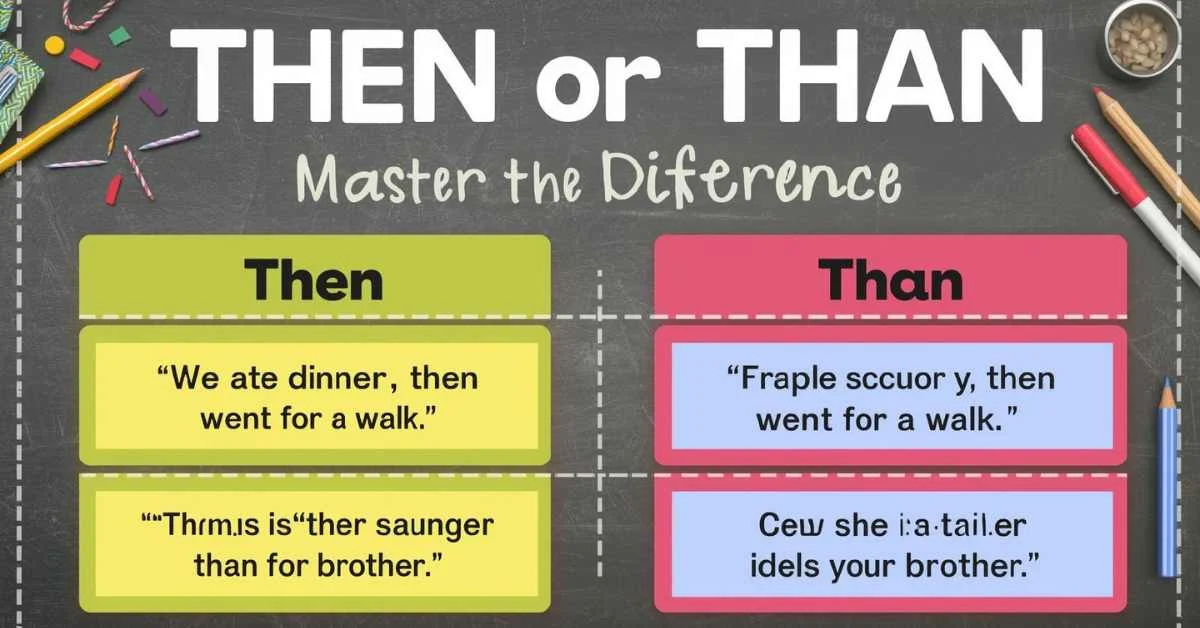
Then is used for time, sequence, or what happens next. Example: “We finished dinner, then we watched a movie.”
Than is used for comparisons. Example: “She runs faster than her brother.”
Tip: If it tells when something happens, use then. If it tells how two things compare, use than.
The Origin of Then or Than
Then comes from Old English “þanne” which meant “at that time.” Over centuries, it evolved to describe sequences and consequences.
Than originates from Old English “þonne,” primarily used in comparisons.
Understanding their origins can help you remember their correct usage. Then deals with time, sequence, or results. Than is strictly for comparisons.
British English vs American English: Spelling and Style
The spelling of then and than is identical in UK and US English. Differences appear in style and punctuation.
| Word | UK Example | US Example | Notes |
|---|---|---|---|
| Then | “Finish your homework, then watch TV.” | “Finish your homework, then watch TV.” | UK style is slightly more formal in written text. |
| Than | “She is taller than her sister.” | “She is taller than her sister.” | Phrasing may be slightly casual in US informal writing. |
Pro Tip: In formal UK writing, longer sentences often separate clauses with semicolons. In American English, shorter sentences are preferred.
Which Spelling Should You Use
For a US audience, follow standard rules. Use then for sequences and than for comparisons.
For UK and Commonwealth audiences, the rules are the same. Pay attention to punctuation and formal writing style.
If you follow the rule for then and than, your writing will be clear in emails, essays, social media, and work.
Common Mistakes with Then or Than
| Incorrect | Correct | Why |
|---|---|---|
| She is taller then me. | She is taller than me. | Comparisons always use than. |
| I would rather go now then later. | I would rather go now than later. | Than is used to compare options. |
| First, we eat than we play. | First, we eat, then we play. | Sequence requires then. |
| I’d rather have coffee then tea. | I’d rather have coffee than tea. | Coffee vs tea is a comparison. |
| Finish homework then submit it. | ✅ Correct | Sequence example. |
| She is smarter then John. | She is smarter than John. | Comparison example. |
Pro Tip: Replace then with “after that” and than with “compared to” to test your sentence.
Then or Than in Everyday Examples
Emails: “Please review the document, then send it back to me.”
Social Media: “I would rather travel than stay at home all summer.”
News Headlines: “The team scored, then advanced to the finals.”
Formal Writing: “Attention to detail is more important than ever before.”
Text Messages: “Let’s meet for coffee, then go to the movies.”
Using multiple contexts helps reinforce correct usage.
Then or Than Google Trends and Usage Data
People often search for then or than during school, exams, and when writing work documents.
Top countries searching include the United States, United Kingdom, Canada, and Australia.
Then is more searched in the context of sequences and storytelling. Than is searched more for comparisons, grammar guidance, and writing improvement.
Comparison Table: Then vs Than
| Feature | Then | Than |
|---|---|---|
| Function | Time, sequence, consequence | Comparison |
| Example | “Finish homework, then relax.” | “She is taller than her brother.” |
| Origin | Old English “þanne” | Old English “þonne” |
| Common Mistake | Using in comparisons | Using in sequences |
| Usage Context | Emails, storytelling, instructions | Academic writing, comparisons, choice statements |
FAQs About Then or Than
Q1: Can I use then instead of than? A: No. Then is for sequences. Than is for comparisons.
Q2: Can I start a sentence with than? A: Rarely. Than usually follows the subject in comparisons.
Q3: How do I remember the difference? A: Replace then with “after that” and than with “compared to.”
Q4: Are there regional differences? A: Spelling is identical. UK English is slightly more formal with punctuation and style.
Q5: What about idioms like “more than meets the eye”? A: Than is always correct in comparison idioms.
Q6: Can I use then in comparisons? A: No. Then is only for time or sequence.
Q7: What is a common beginner mistake? A: Writing “then me” instead of “than me” in comparisons.
Conclusion
Knowing the difference between then and than helps your writing. Then shows time or what happens next. Than shows a comparison. Mixing them can make your writing confusing. This matters in emails, essays, social media, and formal writing. Use memory tricks, simple swaps, and examples to get it right. Learning then vs than is a small change that makes a big difference.

Hi, I’m Lydia Fenn, and I love making English grammar simple and fun. On Punspanda.com, I share tips, examples, and tricks to help you write confidently and never get tripped up by tricky rules.