
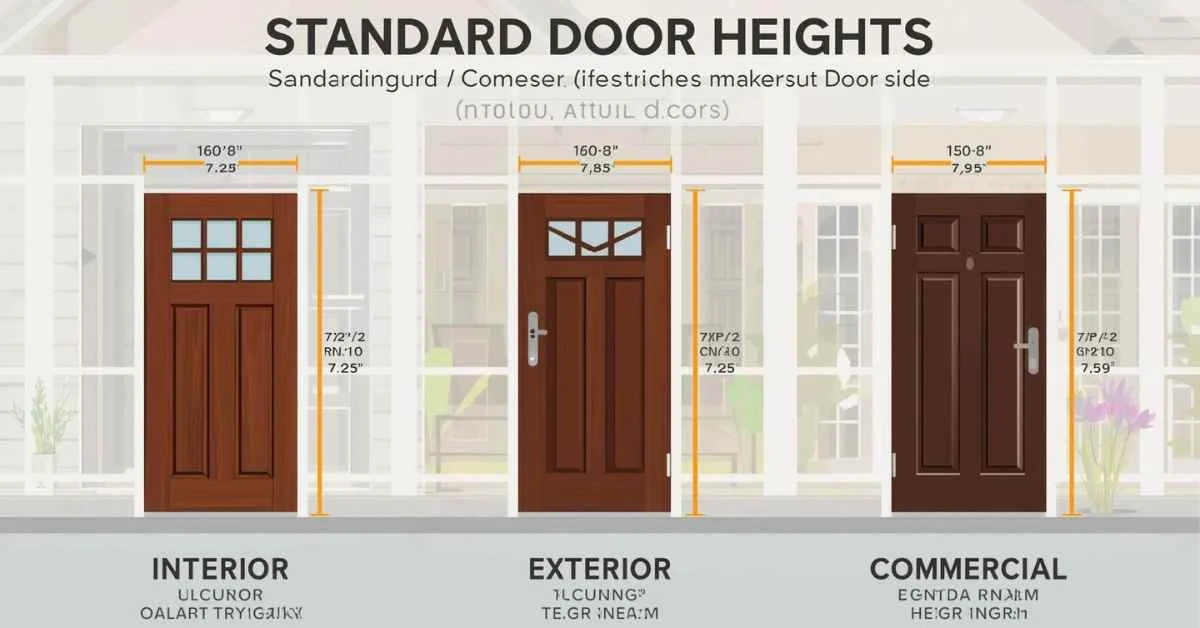
When it comes to designing a home or building, doors might seem like a small detail—but their height can make a significant difference. The standard door height is more than just a measurement; it affects functionality, safety, accessibility, and overall aesthetics.
If you’re replacing an old door, planning a renovation, or constructing a new building, knowing the right dimensions is crucial to avoid costly mistakes. Over the decades, door heights have evolved, with modern homes increasingly opting for taller doors to create a sense of spaciousness.
From interior doors in bedrooms and closets to exterior doors at entryways, each type has typical height standards that vary depending on the region and purpose.
In this guide, we’ll explore everything you need to know about standard door height—including measurement tips, interior and exterior variations, commercial considerations, international comparisons, accessibility requirements, custom options, and practical advice for selecting the right door for your space.
By the end, you’ll have a clear understanding of how to choose doors that are both functional and visually harmonious.
What is the Standard Door Height?
The term “standard door height” refers to the most commonly used vertical measurement for doors in residential and commercial buildings. In the United States, most interior doors have a standard height of 80 inches (6 feet 8 inches), while exterior doors often range from 80 to 96 inches (6 feet 8 inches to 8 feet), depending on style, ceiling height, and design preferences. Commercial doors, such as those in offices, schools, or hospitals, are typically slightly taller, around 84 inches (7 feet), to accommodate higher ceilings and heavy traffic.
Internationally, door height standards vary slightly. In the UK, a standard interior door is usually 1981 mm (6 feet 6 inches), while in much of Europe, the average interior door measures 2000 mm (6 feet 7 inches). Exterior doors in these regions can reach up to 2100 mm (6 feet 10 inches) for residential buildings.
It’s important to note that these numbers are guidelines rather than strict rules. Ceiling height, architectural style, and building codes can influence the ideal door height. Modern homes with higher ceilings, for example, often benefit from taller doors to create a sense of openness, while older homes may require doors that fit existing frames. Understanding standard dimensions ensures that doors are functional, safe, and aesthetically balanced.
| Door Type | Standard Height (US) | Standard Height (UK) | Standard Height (EU) |
|---|---|---|---|
| Interior Door | 80 in (6’8”) | 1981 mm (~6’6”) | 2000 mm (~6’7”) |
| Exterior Door | 80–96 in | 1981–2040 mm | 2000–2100 mm |
| Commercial Door | 84 in (7’) | 2040 mm | 2100 mm |
Factors Affecting Door Height
While standard door heights provide a baseline, several factors can influence the ideal height for your doors. Ceiling height is one of the most important considerations. Rooms with higher ceilings often benefit from taller doors, which create a sense of space and proportion, while standard-height doors may look cramped or out of place. Conversely, in rooms with lower ceilings, sticking to standard heights ensures the door doesn’t overwhelm the space or feel awkward.
Accessibility requirements also play a key role. Public buildings and commercial spaces often need to comply with ADA (Americans with Disabilities Act) standards, which specify minimum clearances and heights to ensure doors are usable by everyone, including individuals using wheelchairs or mobility aids.
Architectural style can influence door height as well. Traditional homes often look best with classic, standard-height doors, while modern or contemporary designs may favor taller, floor-to-ceiling doors for a dramatic effect. Practical considerations such as moving furniture, installing appliances, or creating entryways for large objects may also necessitate custom door heights.
Finally, building codes and regional regulations can dictate minimum or maximum door heights for safety, ventilation, and structural integrity. Considering all these factors ensures that your doors are not only functional and safe but also visually harmonious with the rest of your home or building.
How to Measure Door Height Correctly
Accurate measurement is crucial whether you are replacing an old door, installing a new one, or renovating a space. Even minor errors can result in doors that don’t fit properly or require expensive modifications.
Step 1: Gather Your Tools – You’ll need a tape measure, a level, a pencil, and a notebook to record your measurements. Having a helper is ideal, especially for taller doors.
Step 2: Measure from Floor to Top of Frame – Position the end of your tape measure at the finished floor (not the subfloor) and extend it straight up to the top of the door frame or header. This gives the total height, including clearance for flooring and thresholds.
Step 3: Measure Width – While height is key, width matters too. Standard interior door widths typically range from 28 to 36 inches, and exterior doors usually range from 32 to 36 inches.
Step 4: Check for Uneven Floors – Floors aren’t always level. Measure at multiple points along the bottom to account for variations that could affect door installation.
Step 5: Record and Compare – Write down all measurements and compare them with standard door heights to determine if a standard or custom door is required.
Accurate measurements ensure doors fit perfectly, operate smoothly, and align aesthetically with the surrounding space, preventing costly mistakes in the long run.
Common Misconceptions About Door Height
Despite the simplicity of doors, several common misconceptions can cause confusion:
- Confusing door height with frame height: The door frame often extends slightly above the door itself, so measurements must account for this difference.
- All interior doors are 80 inches: While 80 inches is standard, variations exist based on ceiling height, region, and architectural style.
- Ignoring accessibility standards: Public buildings, commercial spaces, and certain residential settings must comply with ADA regulations for minimum heights and clearances.
- Assuming exterior and interior doors are the same: Exterior doors require extra considerations, including insulation, weatherproofing, and security, which can affect height and design.
Understanding these misconceptions ensures that your doors meet both functional and aesthetic requirements.
Interior Door Heights – What’s Common?
For most U.S. homes, interior doors are 80 inches tall, fitting well with standard 8-foot ceilings. Homes with higher ceilings often benefit from taller doors, typically 84 to 96 inches, which create a sense of openness and luxury.
Closet, pantry, and pocket doors may vary slightly in height to accommodate storage needs or specific design preferences. Choosing the right interior door height requires balancing room proportions, ceiling height, and furniture placement. Doors that are too short may feel cramped, while overly tall doors can appear disproportionate in smaller rooms.
By carefully considering these factors, you can select interior doors that enhance both functionality and the overall flow of your home.
Exterior Door Heights – What You Need to Know
Exterior doors serve multiple purposes, including security, insulation, and aesthetics. While the standard height is 80 inches, many homeowners opt for doors ranging from 84 to 96 inches to complement high ceilings or create a more dramatic entrance.
Practical considerations such as security, insulation, and thresholds influence exterior door height, while design aesthetics also play a role. Modern homes often feature floor-to-ceiling or taller exterior doors, while traditional homes may stick closer to standard heights for consistency.
Custom exterior doors allow for unique styles and grand entrances, but accurate measurement and local building code compliance are essential to ensure proper fit and safety.
Commercial Door Heights
Commercial doors, used in offices, schools, hospitals, and retail spaces, are generally taller than residential doors, typically 84 inches (7 feet) or more. Accessibility standards, such as ADA regulations, require minimum heights of 80 inches and widths of 32–36 inches to accommodate mobility aids.
Safety is another factor: fire-rated doors and industrial entrances often have specific height requirements, while warehouse and facility doors may exceed 10 feet to allow large equipment or vehicles to pass. Balancing code compliance, accessibility, and design ensures commercial doors are functional, safe, and visually appealing.
Custom Door Heights
Custom doors are ideal when standard heights don’t meet design or functional needs. High ceilings, luxury interiors, and unique spaces often require doors 84–96 inches or taller, enhancing elegance and spatial perception. Custom options also allow for decorative panels, arched tops, or sliding barn-style doors.
When planning custom doors, precise measurement, building code compliance, and proper support for door frames and hardware are critical. While custom doors are more expensive, the added functionality and aesthetic appeal often justify the investment.
Tips for Choosing the Right Door Height
- Consider Ceiling Height and Room Proportions – Match door height to ceiling height for a balanced look.
- Think About Accessibility – Ensure compliance with ADA or other regulations for public spaces or homes with mobility requirements.
- Match Door Height With Width – Proportional dimensions maintain visual harmony.
- Plan for Furniture and Moving Needs – Taller or wider doors simplify moving large items.
- Consider Aesthetic and Design Goals – Custom or taller doors enhance style and luxury.
These tips help homeowners, architects, and builders select doors that are functional, safe, and visually pleasing.
International Standards & Comparisons
Door heights vary globally. In the US, standard interior doors are 80 inches, and exterior doors range from 80–96 inches. In the UK, interior doors are typically 1981 mm, while exterior doors reach 2040 mm. Europe averages 2000 mm for interiors and 2100 mm for exteriors. In Asia, door heights vary widely; Japan often uses 1900–2000 mm for interior doors due to traditional designs, while modern apartments may follow Western standards. Always check local building codes before installing international or imported doors.
FAQs About Standard Door Height
1. What is the average door height in a house?
80 inches for interiors, 80–96 inches for exteriors.
2. Can I make a standard door taller?
Yes, custom doors up to 96 inches are common for high ceilings.
3. What is the ADA-compliant door height?
Minimum clear height of 80 inches, with width 32–36 inches.
4. Are all interior doors the same height?
No. Older homes may have shorter doors; modern homes may have taller doors.
5. How do I measure door height accurately?
Measure from finished floor to the top of the door frame, accounting for thresholds.
6. Do exterior and interior doors have different height standards?
Yes, exterior doors consider thresholds, insulation, and security.
7. Can I use international door standards in my home?
Yes, but always check local building codes first.
Conclusion
Understanding standard door height is essential for homeowners, builders, and designers. Standard interior doors in the US are 80 inches, while exterior doors range from 80–96 inches. Factors like ceiling height, accessibility, style, and furniture movement influence the ideal door height. Custom doors allow for taller, wider, or uniquely designed options, enhancing both aesthetics and functionality.
By accurately measuring, consulting building codes, and considering design goals, you can select doors that are safe, functional, and visually harmonious. Whether sticking to standard sizes or opting for custom designs, the right door height can dramatically improve the look and feel of your home or building, ensuring long-term satisfaction and usability.

Hi, I’m Jam Sun, the creator of Punspanda.com. I write fun, clever puns, jokes, and easy-to-read humor content designed to entertain, inform, and make people smile. My goal is simple: turn everyday words into share-worthy laughs.