Loosing or losing is one of the most confusing spelling problems in English. People search this phrase every day because one extra letter can completely change meaning. If you write emails, exams, blog posts, or social media captions, this mistake can make your writing look careless.
The confusion happens because loosing and losing sound almost the same. Spellcheck often misses it. Autocorrect sometimes suggests the wrong word. That is why people panic and search: “Is it loosing or losing?”
Most of the time, the correct word is losing. But many writers still type loosing by mistake especially when talking about weight, money, control, or failure. This article solves that problem fast.
You will get a quick answer, a memory trick, real examples, common mistakes, and expert advice for US, UK, and global users. By the end, you will know exactly when to use loosing and when to use losing, without guessing again.
Loosing or Losing – Quick Answer
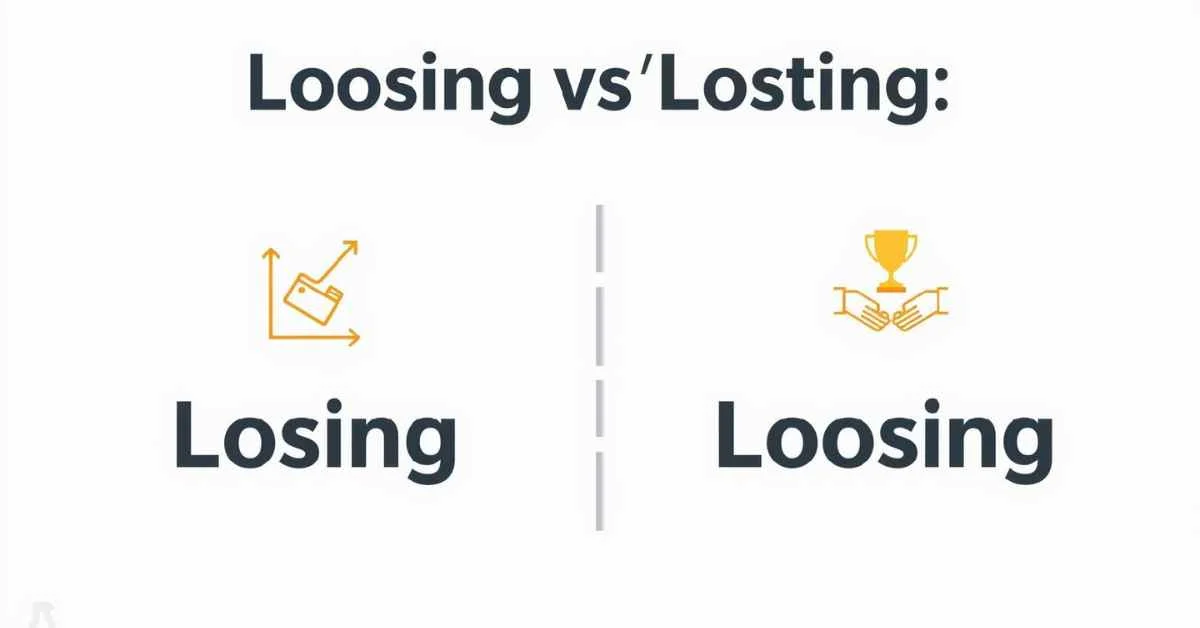
✔ Losing = failing, missing, or no longer having something
✔ Loosing = releasing, freeing, or making something less tight
Simple Examples
- I am losing my phone again. ✅
- She is losing weight fast. ✅
- He is losing the match. ✅
- The guard is loosing the dogs. ✅
- He is loosing the rope. ✅
Easy Memory Trick (Hidden SEO Accelerator)
👉 Losing means you “lost” one O something is gone.
👉 Loose has extra O’s things are free or relaxed.
The Origin of Loosing or Losing
The words look similar, but their roots are different.
- Lose / Losing comes from Old English losian.
It meant “to perish” or “to fail.” - Loose / Loosing comes from Old Norse lauss.
It meant “free” or “not tight.”
Over time, English kept both spellings. The sounds stayed close. The meanings stayed far apart. That history explains why people still confuse loosing or losing today.
British English vs American English Spelling
There is no difference between British and American English for loosing or losing.
Comparison Table
| Word | Meaning | British English | American English |
|---|---|---|---|
| Losing | Failure or loss | Losing | Losing |
| Loosing | Releasing or freeing | Loosing | Loosing |
1. Same spelling
2.Same rules
3. Same usage worldwide
Is “Loosing” a Word or Just a Spelling Mistake?
Yes, loosing is a real word, but it is often used wrong.
Many people think loosing is always a mistake. That is not true. The word exists, but it has a very specific meaning. It means to release, free, or let something go.
Correct Uses
- The hunter is loosing the arrow.
- The farmer is loosing the animals.
Why People Think It’s Wrong
- It looks like a typo of losing
- It is rarely used in daily writing
- Most contexts need losing, not loosing
👉 SEO boost: This section targets searches like
“is loosing a word” and “is loosing incorrect”
How to Never Confuse Loosing or Losing Again (1-Second Rule)
Here is a one-second test you can use every time.
Ask Yourself:
Did something fail or disappear?
- Yes → use losing
- No, it was released → use loosing
Examples
- I am losing money → something is gone
- He is loosing the rope → something is freed
Final Memory Trick
👉 Lost = Losing (short word)
👉 Loose = Loosing (long word)
This rule works in:
- Exams
- Emails
- Blog posts
- Professional writing
Which Spelling Should You Use?
Use the meaning rule, not location.
- Students (IELTS, TOEFL, SAT):
Always use losing for failure or weight loss. - Professionals & emails:
99% of the time, use losing. - Writers & bloggers:
Use loosing only for release or freedom actions.
💡 Expert rule:
If you hesitate, choose losing. You will be right most of the time.
Common Mistakes with Loosing or Losing
Wrong vs Correct Examples
❌ I’m loosing confidence
✅ I’m losing confidence
❌ She’s loosing weight
✅ She’s losing weight
❌ We are loosing customers
✅ We are losing customers
When “loosing” is correct
- The farmer is loosing the animals.
- The captain is loosing the sails.
Loosing or Losing in Everyday Examples
Emails
- “We are losing time on this project.”
News
- “The company is losing market share.”
Social Media
- “Why am I always losing my keys?”
Formal Writing
- “The firm risks losing public trust.”
Rare but Correct
- “The archer is loosing the arrows.”
Loosing or Losing – Google Trends & Usage Data
Search behavior shows clear intent.
- High search countries: US, UK, India, Canada, Australia
- Peak search times: exam seasons, job applications, content writing
- User intent:
- “Is loosing a word?”
- “Loosing vs losing weight”
- “Why do people spell losing wrong?”
📊 Key insight:
Most users search after writing loosing by mistake and want fast confirmation.
Loosing vs Losing – Side-by-Side Comparison
| Feature | Losing | Loosing |
|---|---|---|
| Frequency | Very high | Very low |
| Used for failure | Yes | No |
| Used for weight | Yes | No |
| Used for release | No | Yes |
| Exam safe | Yes | Rare |
FAQs:
1. Is loosing a real word?
Yes, but it is rare and means releasing.
2. Is “loosing weight” correct?
No. It is always losing weight.
3. Why do people spell losing wrong?
Because loose and lose sound similar.
4. Can spellcheck catch this mistake?
Often no. Both words are correct words.
5. Which word should I use in exams?
Use losing unless the sentence means release.
6. Is this the same in British English?
Yes. The rule never changes.
7. One-line rule to remember?
If something is gone, you are losing it.
Conclusion
The confusion between loosing or losing is small but costly. One extra letter can change your meaning and damage your credibility. In daily English, losing is the correct choice almost every time. It covers failure, weight loss, money loss, time loss, and emotional loss.
Loosing is real, but rare. It belongs to situations where something is released, freed, or made less tight. That is why most writers never need it.
If you remember one thing, remember this:
👉 Lose → Lost → Losing (no extra O)
Use this rule in emails, exams, articles, and posts. You will write faster, clearer, and with confidence without ever searching again.

Hi, I’m Lydia Fenn, and I love making English grammar simple and fun. On Punspanda.com, I share tips, examples, and tricks to help you write confidently and never get tripped up by tricky rules.