
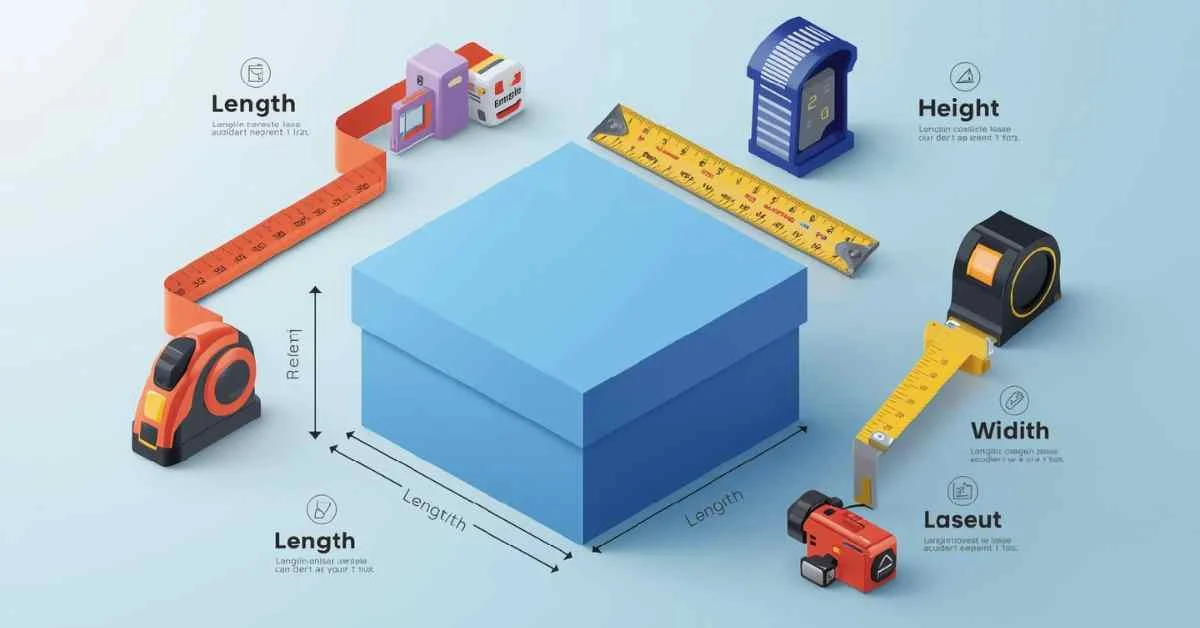
Understanding the dimensions of objects—length, width, and height—is more important than it may seem. These three basic measurements form the foundation of how we interact with the physical world.
From arranging furniture to designing products, calculating shipping costs, or creating 3D models, knowing how to measure these dimensions accurately is essential.
Length, width, and height help determine not only the size of an object but also its volume and surface area, which are crucial in math, construction, and engineering.
Despite their simplicity, many people confuse these terms or overlook their importance, leading to mistakes in daily life or professional projects. This guide will break down each dimension, explain how to measure them precisely, and show practical applications, ensuring you can confidently work with objects of any size.
Understanding the Basics
Before diving into measurements, it’s important to understand what length, width, and height actually mean.
Length is the longest side of an object, indicating how far it extends from one end to the other. For instance, a carpet’s length tells you how far it will stretch across your room. Units include meters, feet, centimeters, and inches.
Width is the distance from side to side, perpendicular to the length. It is crucial for determining if furniture or items fit in a space. For example, a table may be 2 meters long and 1 meter wide, giving a clear idea of its footprint.
Height measures how tall an object is, from base to top. Height is vital for objects that must fit under shelves, doorways, or ceilings, such as refrigerators or wardrobes.
Understanding these dimensions is key for calculating volume, surface area, and planning layouts, whether in construction, interior design, or shipping.
How to Measure Length, Width, and Height
Accurate measurement requires the right tools and method.
Tools You Can Use:
- Rulers & Tape Measures: For small to medium objects.
- Laser Distance Meters: Ideal for large spaces and construction projects.
- Digital Apps: AR-based smartphone apps allow on-the-go measurements.
Step-by-Step Guide:
- Length: Measure the longest side in a straight line.
- Width: Measure perpendicular to the length.
- Height: Measure from the base to the top; for irregular objects, take the highest point.
Tips for Accuracy:
- Measure twice for confirmation.
- Keep measurements level and straight.
- Convert units consistently: 1 inch = 2.54 cm, 1 foot = 0.3048 meters.
Mastering these steps ensures reliable measurements for any object or project.
Practical Applications
Home & Interior: Accurate measurements ensure furniture fits perfectly, avoiding crowded spaces or blocked pathways. Rugs, tables, cabinets, and shelves all require precise length, width, and height measurements.
Construction & Engineering: Blueprints, room layouts, and structures rely on exact dimensions. Ceiling heights, door widths, and furniture fit are all critical to safety and efficiency.
Packaging & Shipping: Companies calculate volumetric weight using length × width × height. Accurate dimensions prevent overpayment and ensure safe shipping.
3D Modeling & Printing: Designers and 3D printers rely on precise input of all three dimensions. Even minor errors can distort models or objects.
Mastering these measurements makes everyday tasks and professional projects more efficient.
Calculating Volume & Area
Volume shows the space an object occupies. Formula for rectangular objects: Volume=Length×Width×Height\text{Volume} = \text{Length} \times \text{Width} \times \text{Height}Volume=Length×Width×Height
For example, a box 2 m long, 1 m wide, and 0.5 m high has a volume of 1 cubic meter. Volume is essential for shipping, storage, and 3D printing.
Surface Area measures the total exterior of an object: Surface Area=2×(L×W+L×H+W×H)\text{Surface Area} = 2 \times (L \times W + L \times H + W \times H)Surface Area=2×(L×W+L×H+W×H)
Surface area is useful for painting, wrapping, or coating objects.
Tips:
- Measure in consistent units.
- Divide irregular shapes into smaller sections and sum results.
- Double-check calculations for professional applications.
Common Mistakes & How to Avoid Them
Confusing Length and Width: Length is the longest side; width is perpendicular. Always confirm which side you’re measuring.
Ignoring Height: Height is often overlooked; measure from base to top to avoid errors in fitting objects.
Incorrect Unit Conversion: Stick to one unit system before calculations.
Measuring Irregular Shapes: Measure multiple points or break the object into smaller shapes.
Rushing Measurements: Always measure twice and use appropriate tools.
Awareness of these pitfalls ensures accuracy in daily life and professional projects.
Advanced Insights
Dimensions in 3D Coordinate Systems: X (length), Y (width), Z (height) are essential in CAD, gaming, and simulations.
Math & Physics Applications: Dimensions are key for volume, surface area, density, and structural stability. A tall, narrow object behaves differently than a short, wide one under force.
3D Modeling & Printing: Accurate dimensions ensure models are proportional and functional.
Dimensional Analysis: Helps verify units and calculations in scientific and engineering projects.
Understanding advanced applications highlights the importance of these dimensions in professional and technical fields.
Tools & Technology
Traditional Tools: Rulers, tape measures, yardsticks.
Digital Tools: Laser distance meters, digital calipers.
Smartphone Apps: AR measurement apps for quick, on-the-go measurements.
Online Calculators: Input dimensions to calculate volume, surface area, or shipping weight.
Combining traditional and digital tools ensures speed, accuracy, and flexibility.
FAQs
What is the difference between length and height?
Length = longest side, height = distance from base to top.
How do I convert units?
Inches → cm: ×2.54 | Feet → m: ×0.3048 | cm → inches: ÷2.54
How to measure irregular objects?
Measure multiple points, use the largest values, or divide into smaller sections.
Why are these dimensions important?
They ensure accurate planning, packaging, construction, and design.
Which tools are best?
Tape measures, laser distance meters, digital calipers, AR apps.
Conclusion
Mastering length, width, and height goes beyond simple measurements—it’s key for accurate volume, surface area, and fit in every project. Using proper tools, avoiding common mistakes, and understanding advanced applications ensures precision in home projects, shipping, construction, and 3D modeling. Modern technology, combined with traditional methods, allows faster, more reliable measurements. By carefully measuring, converting units, and understanding dimensional relationships, you can confidently plan, design, and create in the real world. Length, width, and height are not just numbers—they are the foundation of spatial awareness and efficiency.

Hi, I’m Jam Sun, the creator of Punspanda.com. I write fun, clever puns, jokes, and easy-to-read humor content designed to entertain, inform, and make people smile. My goal is simple: turn everyday words into share-worthy laughs.