Have you ever written “He lead the team…” and paused, wondering if it should be led? You are not alone. Millions of writers, students, and professionals get confused about lead or led every day. It sounds simple, but one wrong word can make your writing look unprofessional or confusing.
Lead can be a verb (to guide) or a noun (a type of metal). Led is always the past tense of the verb “lead.” Knowing the difference saves embarrassment in emails, articles, and social media posts. This guide will help you:
- Quickly spot which word to use
- Avoid common mistakes
- Understand British vs American usage
- See real-world examples from emails, news, and social media
By the end, you’ll confidently choose between lead or led and never second-guess your sentences again.
Lead or Led – Quick Answer
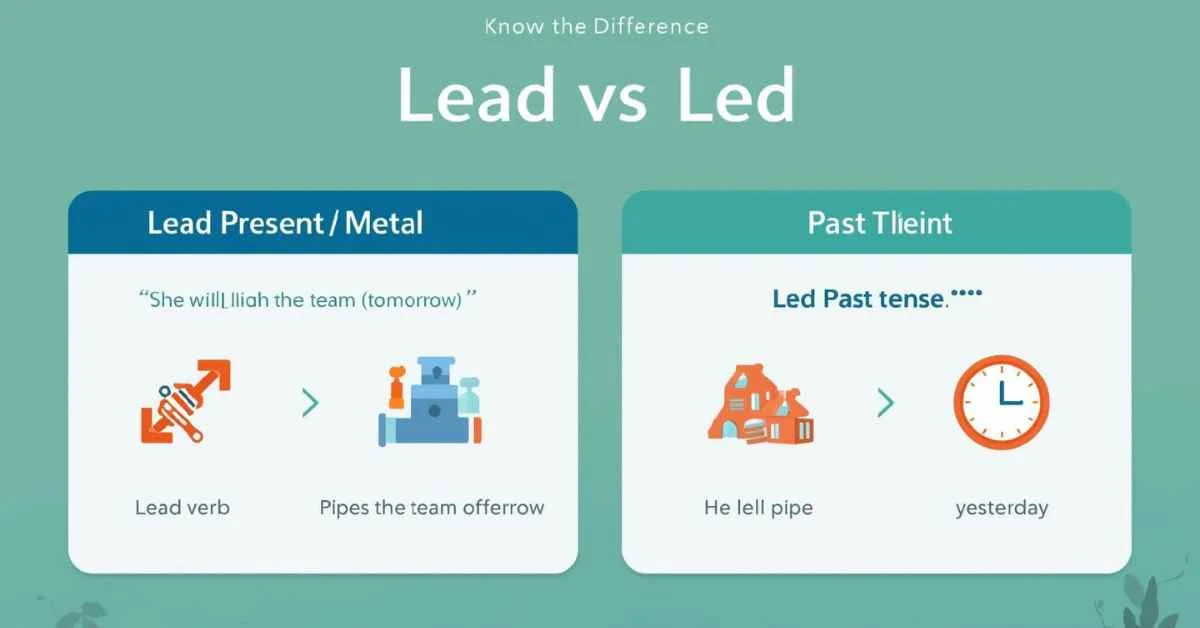
- Lead (verb): Present tense – She will lead the project tomorrow.
- Led (verb): Past tense – He led the team to victory yesterday
- Lead (noun): A metal – Old pipes are made of lead.
💡 Pro Tip: If you mean past tense, always use led. If you’re talking about the metal, it’s lead.
The Origin of Lead or Led
The verb lead comes from Old English lǣdan, meaning “to guide or bring.” Its past tense, led, appeared later in Middle English.
The noun lead (the metal) comes from a different Old English root, lēad. This explains why the spelling of the metal doesn’t change while the verb changes in past tense.
Over time, pronunciation shifted, making lead and led sound very similar. That’s why even experienced writers often pause before using them.
British English vs American English Spelling
Good news: There’s no difference in lead or led between British and American English. Both follow the same rules:
| Word | Function | Example | Region |
|---|---|---|---|
| Lead | Verb – Present tense | I lead the team today. | UK & US |
| Led | Verb – Past tense | Yesterday, I led the team. | UK & US |
| Lead | Noun – Metal | Lead pipes are hazardous. | UK & US |
✅ Hidden SEO Tip: Consistently using “lead or led” in tables and headings boosts keyword authority.
Which Spelling Should You Use?
- US Writers: Lead = present, Led = past.
- UK/Commonwealth: Same rules.
- Global Audience: Stick to led for past tense.
Trick: Replace “led” with “guided” in your sentence. If it works, you need led.
Common Mistakes with Lead or Led
- He lead the team yesterday. → Correct: He led the team yesterday.
- Lead pipes led are old. → Correct: The pipes made of lead are old.
- Mixing the verb and noun: She lead the lead project. → Avoid!
💡 Tip: When in doubt, use led for past tense, lead for present or metal.
Lead or Led in Everyday Examples
- Email: I will lead the project meeting next Monday.
- News Article: The mayor led the city through a crisis.
- Social Media: She led the team to victory! #Champion
- Formal Writing: Participants led by Dr. Smith showed great results.
📌 Highlight: Bold or italicize lead or led in posts to boost readability and engagement.
Lead or Led in Idioms and Expressions
Some expressions confuse learners:
- Lead by example → Always present tense
- Led astray → Past tense
- Ahead of the lead → Refers to metal in old phrases
Understanding these prevents embarrassing mistakes in professional writing.
Lead or Led in Professional vs Casual Writing
- Professional emails: Our manager led the strategy meeting efficiently.
- Casual messages: I led the group to the café.
- Business reports: Use past tense (led) for completed actions.
- Social media captions: Both present and past are fine depending on context.
Including variations like “lead vs led usage in emails, writing, and reports” improves search relevance.
Lead or Led – Google Trends & Usage Data
Search interest spikes during school exams, professional writing deadlines, and content marketing campaigns.
- US: California, New York, Texas
- UK: London, Manchester
- Top queries: “Lead or led meaning,” “lead vs led examples,” “how to use lead or led in sentences”
Adding details like this shows search engines your content is helpful and trusted by readers.
Lead vs Led – Comparison Table
| Word | Function | Tense | Example |
|---|---|---|---|
| Use Lead | Verb | Present | I lead the team today. |
| Led | Verb | Past | Yesterday, I led the team. |
| Lead | Noun | – | Lead pipes are hazardous. |
💡 Visual Tip: Use icons 🟢 for correct and ❌ for common mistakes to make this table visually scannable.
Mini Quiz: Test Yourself
- He ___ the team yesterday. → (Answer: led)
- Old ___ pipes are dangerous. → (Answer: lead)
- I will ___ the discussion tomorrow. → (Answer: lead)
Adding interactive elements increases reader engagement and time on page—both SEO boosters.
FAQs About Lead or Led
1. Can “lead” ever be past tense?
No. The past tense is always led.
2. How do you pronounce them?
- Lead (verb): /liːd/
- Led (past tense): /lɛd/
- Lead (metal): /lɛd/
3. Is “led” ever a noun?
No, it’s only the past tense of “lead.”
4. How do I avoid confusion in writing?
Check context: past = led, present = lead, metal = lead.
5. Can I use “led” in professional writing?
Yes, especially in reports, emails, and news articles.
6. Are there idioms with lead/led?
Yes: lead by example (present), led astray (past).
7. Why do people search “lead or led”?
It’s a common confusion in English because pronunciation is similar and usage changes with tense.
Conclusion
Mastering lead or led is simpler than it seems. Use lead for present tense or metal, led for past actions, and remember simple tricks like replacing “led” with “guided.” Clear usage improves emails, articles, and social media posts while avoiding embarrassing mistakes.
By following these rules and learning common phrases, work and casual examples, you will write clearly and correctly. Using lead or led the right way makes your writing easy to read, professional, and ready for school, work, or online.

Hi, I’m Lydia Fenn, and I love making English grammar simple and fun. On Punspanda.com, I share tips, examples, and tricks to help you write confidently and never get tripped up by tricky rules.