Have you ever sent an email or homework and later worried you used the wrong word? The mix-up between layed or laid confuses many students, workers, writers, and English learners every day. One small spelling mistake can make your writing look bad. It can lower trust and even cost marks or respect.
People search for “layed or laid” because English does not play fair here. Most verbs add -ed in the past tense, so “layed” feels right. But English grammar breaks that pattern, and many spellcheck tools don’t clearly explain why. That leaves users frustrated, unsure, and double-checking sentences they should feel confident about.
This article fixes the problem fast. You get one clear rule, easy examples, simple tables, and memory tricks that work. If you write emails, news stories, social posts, or school work, this guide gives quick answers and clear help without confusion.
Layed or Laid – Quick Answer
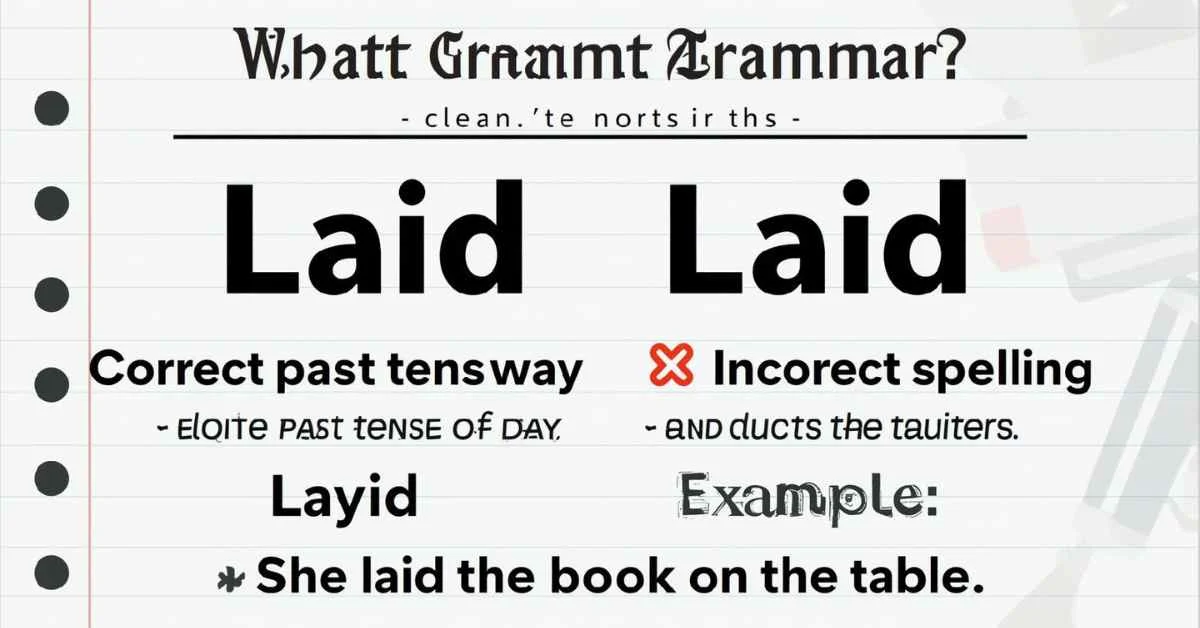
✅ “Laid” is correct.
❌ “Layed” is incorrect.
Grammar Rule (Important):
Lay is an irregular verb. Its past tense and past participle is laid.
“Layed” does not exist in standard English.
Examples
- ✅ She laid the phone on the table.
- ❌ She layed the phone on the table.
If something was placed down, the word is laid—always.
The Origin of Layed or Laid
The verb lay comes from Old English lecgan, meaning to place or put down. English kept its irregular verb form instead of adding -ed.
Verb forms:
- Present: lay
- Past: laid
- Past participle: laid
The spelling “layed” never existed historically. It appears today because people apply regular verb logic, like:
- play → played
- stay → stayed
But lay does not follow this rule. English evolved differently here, which is why the mistake is so common.
British English vs American English Spelling
There is no spelling difference between British and American English for this word.
| English Type | Correct Form | Incorrect Form |
|---|---|---|
| American English | laid | layed |
| British English | laid | layed |
| Australian English | laid | layed |
| Canadian English | laid | layed |
Across all regions, “laid” is the only correct spelling.
Which Spelling Should You Use?
- US audience: Use laid
- UK & Commonwealth: Use laid
- Global or ESL readers: Use laid
There is no audience, dialect, or situation where “layed” is acceptable in proper English writing.
Easy Trick to Remember Layed or Laid
If you forget grammar rules, use this one-second trick.
Replace the word lay with pay.
- She paid the book on the table. ❌
- She laid the book on the table. ✅
If paid works, then laid is correct.
More examples:
- He paid the cards down. ❌ → He laid the cards down. ✅
- She paid the baby in bed. ❌ → She laid the baby in bed. ✅
This trick works every time because pay → paid and lay → laid follow the same pattern.
Why Spellcheck Sometimes Misses “Layed”
Many people trust spellcheck, but it is not perfect.
Spellcheck tools often:
- Focus on sentence flow
- Miss grammar logic
- Allow words that look real
Because “layed” looks like a normal verb, some tools fail to flag it. That’s why writers still use it by mistake in emails, posts, and articles.
The rule is simple:
- Spellcheck may allow it
- Grammar does not
Always trust the rule, not the tool.
Common Mistakes with Layed or Laid
❌ Frequent Errors
- He layed the foundation last year.
- She has layed the files on your desk.
✅ Correct Usage
- He laid the foundation last year.
- She has laid the files on your desk.
Why people get it wrong:
They assume lay behaves like regular verbs. It doesn’t.
Layed or Laid in Everyday Examples
Emails
- I laid the report on your desk.
News Writing
- The company laid off 300 workers.
Social Media
- Just laid my phone down and now I can’t find it.
Formal Writing
- The court laid the evidence before the jury.
Layed or Laid – Google Trends & Usage Data
Over the past 12 months, searches for “layed or laid” spike during:
- Exam seasons
- Writing deadlines
- Grammar-related searches
Countries with the highest search interest:
- United States
- United Kingdom
- India
- Pakistan
- Canada
This shows a global grammar pain point, especially for students, writers, and ESL users looking for fast clarity.
Comparison Table: Layed vs Laid
| Word | Correct? | Why People Use It | Reality |
|---|---|---|---|
| laid | ✅ Yes | Irregular verb form | Correct past tense of lay |
| layed | ❌ No | Assumed regular spelling | Not a real English word |
FAQs: Layed or Laid
1. Is “layed” a word in any context?
No. “Layed” is never correct in standard English.
2. What is the past tense of “lay”?
The past tense of lay is laid.
3. Why does “laid” not end in -ed?
Because lay is an irregular verb.
4. Is “laid” used in British English?
Yes. British and American English both use laid.
5. Is “laid off” grammatically correct?
Yes. Laid off is a correct and common phrasal verb.
6. How can I remember the correct spelling?
If you can replace the word with paid, then laid is correct.
7. Does this confusion relate to “lay vs lie”?
Yes. Many writers confuse lay vs lie, another common grammar trap.
Conclusion
The debate around layed or laid has a clear winner. Laid is always correct. Layed is always wrong. There are no exceptions, no regional differences, and no hidden grammar rules waiting to surprise you.
If something was put down, it was laid. This one rule helps you write with confidence. It removes doubt in emails, essays, and work documents. Small grammar mistakes can hurt trust. Correct words make your writing clear and strong.
Here’s the final memory trick:
If “paid” fits, “laid” is right.
Once you know this, you’ll never second-guess it again—and your writing will look sharper because of it.

Hi, I’m Lydia Fenn, and I love making English grammar simple and fun. On Punspanda.com, I share tips, examples, and tricks to help you write confidently and never get tripped up by tricky rules.