
Have you ever typed judgment or judgement and paused, unsure which looks right? You’re not alone. Many people get confused because both spellings exist, and the difference depends on where you live and what you are writing.
Writers, students, and professionals search for this topic to avoid mistakes in emails, essays, or legal documents. Using the wrong spelling can make your writing seem careless, even if your meaning is clear.
In this guide, we will show you the right way to use judgment and judgement. We will also look at their history, show the difference between American and British spelling, and give easy examples you can use every day.
By the end, you’ll know exactly which spelling to use and how to avoid common mistakes.
Judgment or Judgement – Quick Answer
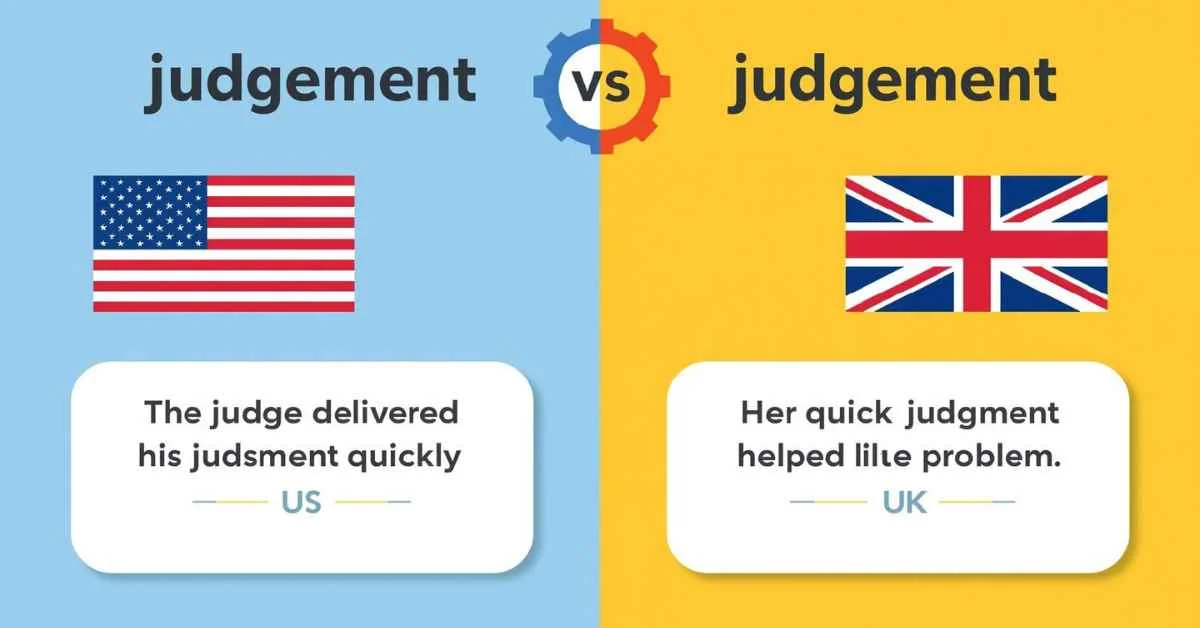
- Judgment = American English, also used in legal writing worldwide.
- Judgement = British English, common in everyday writing.
Examples:
- US: “The judge delivered his judgment quickly.”
- UK: “Her quick judgement helped solve the problem.”
The Origin of Judgment/Judgement
The words come from Old French “jugement” and Latin “judicium”, meaning a decision or opinion.
- Originally, English borrowed judgement from French.
- Americans later dropped the “e” to simplify spelling, creating judgment.
- In the UK, both spellings survived: judgement is common in daily writing, while judgment is used in courts.
Fun fact: The first recorded use of judgment in American legal texts dates back to the 1700s.
British English vs American English Spelling
| Region | Preferred Spelling | Example Sentence |
|---|---|---|
| United States | Judgment | “The court’s judgment was final.” |
| United Kingdom | Judgement | “Her judgement was trusted by everyone.” |
| UK Legal | Judgment | “The judge’s judgment will be recorded.” |
| Commonwealth | Judgement | “I respect his judgement on this matter.” |
Which Spelling Should You Use?
- For US readers: Always use judgment.
- For UK/Commonwealth readers: Use judgement in general writing and judgment in legal documents.
- For international content: Judgment is safer for clarity and search engine visibility.
Quick tip: If your audience is mixed, stick with judgment it’s universally understood.
Common Mistakes with Judgment/Judgement
- Using judgement in US legal writing → always use judgment.
- Using judgment in UK casual writing → correct but can look formal.
- Confusing with judgemental → always spelled judgemental.
- Relying on spellcheck blindly → some tools may auto-correct incorrectly.
- Switching between the two in the same document → reduces consistency.
Judgment/Judgement in Everyday Examples
Emails:
- US: “Please provide your judgment on the proposal.”
- UK: “Her judgement was appreciated by the team.”
News Headlines:
- US: “Supreme Court Issues Historic Judgment.”
- UK: “Editor’s Judgement Shapes the Story.”
Social Media:
- “Your judgement matters. Think before posting!”
Formal Writing:
- Legal documents: Always use judgment.
How Judgment/Judgement Affects Professional Writing
Using the correct spelling of phrase can impact how others perceive your work. Professionals, students, and content creators often make mistakes that subtly affect credibility:
- Emails & Reports: Using the wrong regional spelling can make your writing appear careless. For example, sending “judgement” in a US business email might look informal.
- Resumes & Cover Letters: Attention to detail matters. Correct spelling shows precision. Use judgment in US applications and judgement in UK/Commonwealth applications.
- Academic Writing: Check your style guide. Most US universities require judgment, while UK universities may allow judgement in essays.
- Social Media & Blogging: Consistency is key. Pick one spelling and use it throughout posts to improve readability and user trust.
Common Confusions: Judgment, Judgement, and Judgemental
Many people mix up judgment, judgement, and judgemental, which can create mistakes in writing and misunderstandings:
- Judgment vs Judgement: Already discussed, depends on region and context.
- Judgemental: Always spelled with the “e,” no matter the region. Example: “Don’t be judgemental about someone’s choices.”
- Legal vs Personal Opinions: In law, always use judgment. For personal opinion or quick decision, UK writers often use judgement.
- Automated Spellcheck Issues: Some software may auto-correct UK judgement to US judgment, or flag judgemental incorrectly.
Tips to Avoid Confusion:
- Decide which audience you are writing for.
- Stick to one style consistently in your document.
- Double-check spelling in formal or professional contexts.
Judgment or Judgement – Google Trends & Usage
- “Judgment” is searched more in the US.
- “Judgement” is more popular in the UK, Australia, and Canada.
- Peaks occur during court decisions, academic publications, and news coverage.
Tip: Using Google Trends data can guide your audience-specific spelling.
Comparison Table: Judgment vs Judgement
| Feature | Judgment | Judgement |
|---|---|---|
| American English | ✅ Preferred | ❌ Rarely used |
| British English (general) | ❌ Rarely used | ✅ Common |
| British English (legal) | ✅ Standard | ❌ Not used |
| Commonwealth | ❌ Rarely used | ✅ Common |
| Legal Documents | ✅ Always used | ❌ Not used |
FAQs
1. Can I use “judgement” in the US?
It’s understood, but judgment is correct in American English.
2. Is “judgment” ever wrong in the UK?
No, but it’s mostly for legal writing; everyday writing prefers judgement.
3. Which spelling is better for emails?
Use judgment for US audiences and judgement for UK/Commonwealth readers.
4. How about blogs and articles?
Judgment works best globally for clarity and SEO.
5. Do they sound different?
No, both are pronounced /ˈdʒʌdʒ.mənt/.
6. What about “judgemental”?
Always spelled judgemental, not “judgmental.”
7. Why are people still confused?
Because both spellings are correct regionally and legal exceptions exist.
Conclusion:
Knowing the difference between judgment vs judgement keeps your writing professional and clear. Use ‘judgment’ for US readers, legal papers, and worldwide content. Use ‘judgement’ for everyday writing in the UK and Commonwealth. Remember to stay consistent throughout your document.
By following these rules, you’ll never have to pause and wonder which spelling is right. Using the right spelling makes your writing clear and professional. It also stops mistakes in emails, social media, or work documents.. Now, whether you’re writing a court brief, article, or casual post, you can confidently choose the right spelling every time.

Hi, I’m Lydia Fenn, and I love making English grammar simple and fun. On Punspanda.com, I share tips, examples, and tricks to help you write confidently and never get tripped up by tricky rules.